Insurance and Safety for Business Waste Management
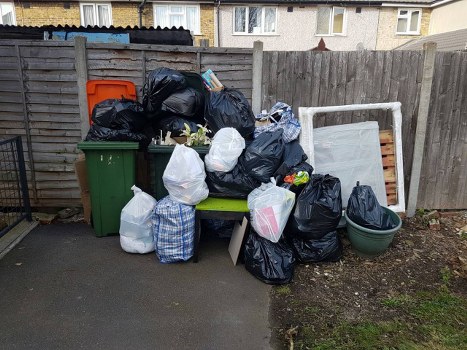 Business waste handling requires a clear and comprehensive approach to insurance and occupational safety. Whether your organization deals with general office refuse, commercial waste streams, or specialist industrial waste, the policies you put in place protect employees, visitors, and the public. This page outlines the key elements of a robust insurance and safety framework for commercial waste operations, including public liability cover, staff training, personal protective equipment, and an actionable risk assessment process. Safety and compliance are not optional.
Effective public liability insurance for corporate waste activities should cover accidental damage to third-party property, bodily injury to non-employees, and liabilities arising from waste collection, handling, storage and disposal. Insurers will often expect documented procedures for everyday operations and emergency response plans for incidents such as spillage, contamination, or fire. In the context of business refuse and industrial waste transportation, limits of indemnity, excess levels and specific endorsements for hazardous or contaminated materials must be reviewed regularly to ensure continuity of cover as your waste profile changes.
 In parallel with insurance arrangements, companies managing commercial refuse must maintain clear management responsibilities and a documented safety culture. This includes written policies that define roles for contract managers, on-site supervisors and external hauliers. Strong governance reduces the likelihood of claims, and demonstrates to insurers that the organisation is taking practical steps to control risks associated with corporate waste streams. Regular audits, incident reporting and corrective action tracking are essential components of this governance framework.
Public Liability and Related Coverages
Public liability is the foundation, but there are additional covers to consider depending on the nature of your business garbage and waste outputs. Employers' liability protects staff, while environmental liability covers accidental pollution events caused by poor storage or spillage of hazardous business waste. Product liability may be relevant if your waste handling equipment causes injury, and motor insurance must reflect the movement of bins and waste vehicles. Review policy wordings annually and ensure that your insurer understands the specific types of commercial waste you produce.
Key insurance checklist for waste handlers
Use a concise checklist to keep insurance aligned with operational reality. Typical items include:
- Declared activities: collection, transfer, storage, treatment, disposal.
- Declared waste types: general, recyclable, clinical, hazardous.
- Vehicle usage and driver credentials for on-road movements of business refuse.
- Contractor and subcontractor cover and indemnity arrangements.
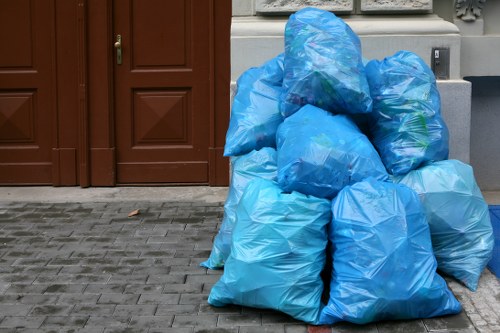 Insurance alone is not enough; a workforce trained in handling commercial waste safely is critical. Staff training should be competency-based, documented and refreshed regularly. Core topics include manual handling, correct use of containment and segregation of recyclable and hazardous streams, hygiene protocols, spill response and incident escalation. Training records form part of your evidence to underwriters that risk is being actively managed.
PPE and Safe Working Practices
Personal protective equipment (PPE) is a visible and necessary control to reduce injuries. For business waste teams, typical PPE includes gloves resistant to cuts and chemicals, high-visibility clothing, steel-toe boots, respirators when dealing with dust or fumes, and eye protection during bulky waste handling. Employers should provide PPE at no cost and ensure it is suitable, properly fitted and maintained. Training on when and how to use PPE ensures it is effective.
 A practical PPE policy should list expected items by task, frequency of replacement, and responsibilities for inspection. Combine PPE with engineering and administrative controls such as mechanical lifting aids, designated traffic routes for collection vehicles, effective lighting, and documented buddy systems for hazardous tasks. Together these controls reduce the severity and frequency of incidents and support your insurance position.
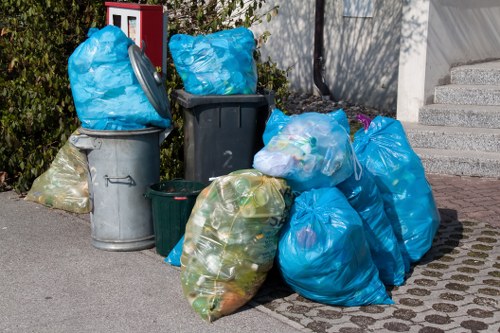 The risk assessment process is the engine that drives safe outcomes. Start with a site-specific hazard identification workshop that includes frontline staff, supervisors and safety representatives. For each identified hazard, describe the potential consequences, likelihood, existing controls, and additional actions required. Rate residual risk and set timelines and owners for mitigating actions. Important elements of the assessment process include:
- Regular review intervals and re-assessment after incidents or changes in operations.
- Clear documentation and communication of control measures to all affected personnel.
- Integration with emergency response plans and waste-specific spill containment strategies.
Maintaining Compliance and Continuous Improvement
To maintain a robust safety and insurance posture for business waste management, embed continuous improvement cycles: monitor performance metrics, conduct near-miss reporting, and update training and PPE provisions based on incident trends and regulatory changes. Encourage a culture where safety concerns are raised without fear of reprisal and where every employee understands their part in protecting the public and the environment from waste-related harm.
Final considerations
Combining appropriate public liability coverage, comprehensive staff training, suitable PPE and a systematic risk assessment process creates a resilient framework for handling corporate and commercial waste. These measures reduce the potential for incidents, improve legal and insurance outcomes, and demonstrate a commitment to responsible, compliant waste stewardship across all sectors.