Business Waste in London
Business Waste in London helps organisations arrange straightforward collection and disposal for everyday commercial rubbish, bulky office items and mixed non-hazardous waste. Our service is designed for premises that need regular support as well as one-off clearances, with an emphasis on separating reusable materials where practical and keeping the process orderly from the first enquiry to the final uplift.
We work with businesses that need a practical waste solution rather than a one-size-fits-all approach. That can include office furniture, packaging, shop fixtures, unwanted stock, general rubbish and light refurbishment debris, together with recycling-led sorting where items are suitable for recovery. For many customers, the main benefit is simply having a clear route for removing waste responsibly without disrupting day-to-day work.
To request a quotation, start by setting out what needs moving, how much there is and when access is easiest. A plain description is often enough to begin, and photographs can help with heavier or mixed loads. If you are planning a clearance, contact us for a quote and we will help you choose the most suitable next step.
Commercial waste collection for day-to-day operations
Commercial waste collection suits offices, retail units, hospitality venues and other workplaces that produce recurring rubbish. Typical loads may include bagged waste, cardboard, packaging, old display materials and smaller redundant items that are not worth leaving on site. A sensible collection plan keeps waste moving out of the way, helps spaces stay workable and reduces the chance of clutter building up around stores, stockrooms or shared back-of-house areas.
Where ongoing collection is needed, it is useful to think about the types of waste produced rather than treating everything as the same load. Some businesses mainly need general rubbish removed, while others regularly generate recyclable cardboard or mixed office waste. Commercial waste collection is a useful starting point when the aim is to keep routine disposal organised rather than waiting until items have piled up. If your focus is more on waste that needs more frequent lifting, waste collection gives a broader option that still centres on practical removal.
Useful details for a quotation are usually simple: the waste type, approximate volume, whether items are loose or bagged, and any access issues such as stairs, limited parking or loading restrictions. One clear note is often enough. If the load contains furniture, electrics or mixed materials, say so early so the right collection method can be chosen. That keeps the process efficient and helps avoid unnecessary back-and-forth later.
Bulky items, furniture and office clearances
Many commercial jobs are not just about sacks of rubbish; they involve furniture, fixtures and larger objects that are awkward to move through normal working spaces. Desks, shelving, chairs, cabinets, reception pieces and stockroom fittings can all need careful handling so they are taken out safely and with minimal disturbance. That is where a more structured clearance service is useful, especially when rooms need to be returned to use quickly.
For larger items, the most sensible approach is to describe what is present and how it is arranged. A handful of mixed items may be handled very differently from a full room of desks or an office suite being emptied. Furniture removal and collection is helpful when the job centres on reusable or bulky office pieces, while office clearance suits sites that need a broader clear-out of work areas, storage rooms or entire floors. If the items are mainly unwanted domestic-style furniture from a commercial property, furniture clearance can also be relevant.
When asking for a quotation, it helps to mention whether any items are fixed, whether lifts or stairs are involved, and whether the clearance must happen around normal trading hours. If there are mixed categories, list the most awkward pieces first. This is especially useful for larger clearances because the main factor is often access rather than sheer quantity. A simple inventory is usually enough to get the conversation started.
Builders waste and refurbishment debris
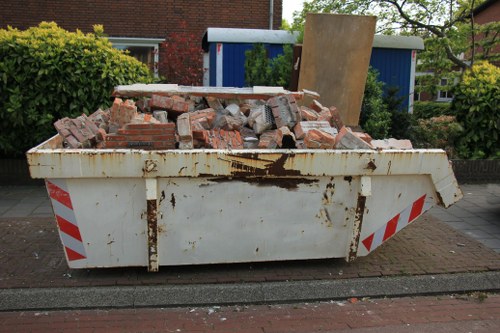
Construction and refurbishment work often leaves behind mixed debris that needs moving out promptly so trades can continue and the space can be handed over cleanly. Typical builders waste may include offcuts, rubble, broken boards, packaging, old fittings and general site rubbish. It is usually best dealt with as a separate stream from ordinary office waste because the materials, weight and handling needs can be quite different.
When the rubbish comes from a fit-out, strip-out or redecoration, the load can vary from light mixed bags to heavier materials that need more careful lifting and sorting. Builders waste clearance is the best match for those refurbishment jobs, while commercial waste disposal is useful where the focus is on the final removal and disposal stage rather than a longer-term collection arrangement. For broader non-office loads, bulk waste collection offers a sensible option when the items are substantial but still part of a managed commercial clear-out.
It is worth noting whether the waste is loose, bagged or stacked, because that changes how long the loading phase may take and whether extra sorting is needed. If some items are reusable and others are not, state that in one short description rather than trying to separate everything yourself. A quotation is easier to prepare when the waste stream is described honestly and plainly, even if the exact volume is only approximate.
Rubbish removal, disposal and recycling choices

Commercial waste does not always fit neatly into one category. Some premises need a mix of rubbish removal, disposal and recycling support, particularly when a clearance combines office contents, packaging, unsold stock and general refuse. The right approach depends on the make-up of the load, the access available and whether items can be separated into different material streams before leaving the site.
For customers who want a straightforward uplift, rubbish removal is a simple term that covers many everyday loads. Where the emphasis is on getting material to the correct end point, waste disposal is a clear match. If your business wants to keep more material in the recycling stream where appropriate, waste recycling and recycling and sustainability are relevant supporting pages that sit naturally alongside a responsible collection plan.
In practice, the most useful quotation detail is not a perfect classification but a sensible description of the load. Say whether it is mostly paper and cardboard, mixed office waste, broken furniture or site debris. If some items are reusable, mention them separately. That gives a better basis for planning the uplift and allows the quotation to reflect the amount of sorting likely to be involved rather than treating everything as identical.
What we can help remove from business premises
Commercial clearances often involve more than one kind of item, which is why a business waste service is most useful when it can handle a varied list without making the process complicated. Depending on the site, we may be asked to remove desks, chairs, cupboards, shelving, printers, boxes, archive material, broken equipment and mixed rubbish from stock or work areas. The aim is to clear usable floor space while keeping the load practical to move and dispose of.
Common service categories include waste clearance for mixed loads, property clearance where a whole site or unit needs attention, and office clearances when the work is more extensive than a simple uplift. Where the job involves larger domestic-style items from commercial property, large item collection can be useful, and if the main issue is a specific object such as a sofa, the more focused sofa removal and collection page may be a better fit.
For a fast and accurate quotation, a short list is better than a vague one. Note the main item types, their rough quantity and the easiest access point, and mention anything fragile or unusually heavy. That gives the team enough to work with without overcomplicating the first step. It also helps identify whether the job is best treated as a single uplift or as part of a broader clearance.
About London
London is a large, historically layered city in south-east England built along the River Thames. Its form reflects centuries of growth from the Roman and medieval core into a wider metropolis shaped by commerce, government, docklands, railways and suburban expansion. The City of London remains the historic financial nucleus, while the Greater London area spreads across a much broader urban landscape of boroughs, town centres and residential districts. The Thames is one of the city’s defining physical features, crossed by a long sequence of bridges and embankments that frame views from west to east. Public green spaces are also an important part of the capital’s character: Hyde Park, Regent’s Park, Hampstead Heath, Greenwich Park and Richmond Park each offer a distinct landscape within the same urban system. Architecture ranges from surviving fragments of older London through Georgian terraces, Victorian civic buildings and warehouse districts to contemporary towers and major cultural venues. Landmarks such as the Houses of Parliament, St Paul’s Cathedral, the Tower of London and the South Bank show how political, religious, commercial and artistic life have all left visible marks on the city. London’s transport network, theatres, museums, markets and neighbourhoods give it a strong sense of local variation, so a walk through one district can feel very different from another only a short distance away. This combination of river, historic core, dense streets and varied borough identities has made London one of the most recognisable and complex cities in Britain.
Use the service details above to match the right type of collection to your premises, then ask for a quotation when you are ready to move forward.
For larger or recurring requirements, it is sensible to compare the available options and choose the page that best reflects the job at hand. Contact us for a quotation when you want the work assessed and arranged in a clear, practical way.
Business waste by location and service type

Location pages are useful when a business wants a more specific starting point for a collection or clearance request. They can help you connect the general service with the kind of premises you are managing, whether that is a shop, office, workshop, storage unit or mixed-use site. For companies with multiple branches or recurring uplift needs, this can make the first enquiry easier to frame because the collection area and the service type are already aligned.
Business waste removal in London gives a broad city-level option, while business waste removal Westminster, business waste removal Camden and business waste removal Islington are more location-specific pages that can suit businesses looking for a narrower local reference. For refurbishment-related work in those areas, builders waste clearance Westminster and builders waste clearance Camden show how the same practical service can be matched to a particular district.
When you request a quotation, it helps to name the area once and then focus on the waste itself. That keeps the enquiry concise and allows the important operational details to stand out. A clear site description, a rough estimate of the load and the preferred timing are usually enough to begin. If the job spans more than one unit or branch, mention that so the quotation can reflect the full scope.
How quotations are usually prepared
Quotations for business waste are usually based on a small set of practical factors: the amount of waste, the kind of materials involved, the ease of access and whether the job is a single collection or part of a larger clearance. Those details matter because two loads of similar size can take very different amounts of handling if one is light and tidy while the other is mixed, heavy or awkward to move. A good quotation therefore reflects the actual work rather than just the room it came from.
The most helpful information is often modest and specific. If possible, state whether the waste is in bags, loose, boxed or stacked; whether it is on the ground floor or upstairs; and whether there are parking, loading or building access restrictions. If you are comparing options, pricing and quotes is a sensible page to review, while contact us is the natural place to go when you are ready to request a quotation directly.
Keep the description honest and simple rather than trying to make it sound larger or smaller than it is. If you are unsure about the exact amount, a rough estimate and a few notes about the heaviest items are usually enough. Clear information supports a clearer price discussion, and it also reduces the chance of confusion when the work is scheduled.
Sorting, recycling and site-sensitive removals

Many businesses prefer to separate waste streams where possible, especially when a clearance includes a mix of reusable items, recyclable material and general rubbish. Sorting before collection can be useful, but it is not always necessary to overprepare. In some settings, the simplest approach is to identify the main categories and let the collection plan reflect them. That keeps the process practical while still giving recyclable material a proper route where suitable.
For office waste, cardboard, paper, light plastics and some redundant equipment may be suitable for different handling routes, while heavier or broken items often need a separate approach. recycling and rubbish is a relevant page when the load contains both recoverable and non-recoverable material, and white goods recycle may be useful if the job includes appliances from a commercial setting. Where the work is more about getting a space back into use, flat clearance can also be a practical reference point for mixed-property removals.
If you want a quotation, the best next step is to describe what is present and how it is stored. You do not need to write a long inventory; a short summary is enough. Then ask for a quotation and mention the date range that would suit you. That is often all that is needed to move from an initial enquiry to a workable plan.