 This Health and Safety Policy sets out the organisation's commitment to safe handling, storage and disposal of business waste across all operations. The policy applies to all employees, contractors and stakeholders involved in the management of business waste, whether generated by day-to-day office activity, retail operations, industrial processes or other commercial functions. It recognises that proper commercial waste handling reduces risk, protects health, prevents environmental harm and supports operational resilience.
Health and Safety Policy for Business Waste Management
Purpose and scope. This policy establishes expectations for safe practices related to the segregation, containment and transport of commercial refuse and corporate waste streams. It aims to ensure that waste-related activities do not create hazards to staff, visitors, or the public and that risks associated with hazardous or potentially infectious materials are adequately controlled. The organisation undertakes to provide resources, training and oversight to achieve these objectives and to integrate waste safety with broader occupational health and safety arrangements.
 Responsibilities and governance. Senior management holds overall accountability for ensuring that robust waste health and safety arrangements are in place. Operational managers are responsible for implementing controls, while employees and on-site personnel must follow procedures and report hazards. Contractors engaged for waste collection, transfer or treatment must meet the organisation's safety standards and demonstrate competence. Key responsibilities include:
- Risk identification: recognising waste streams that present physical, chemical or biological hazards.
- Safe systems: maintaining written procedures for segregation, storage and movement of refuse.
- Incident notification: prompt reporting of spills, exposures and near misses.
Risk assessment and control measures
Risk assessments specific to business refuse must be carried out for routine and non-routine activities. These assessments evaluate manual handling risks, exposure to hazardous substances, fire potential and traffic interactions during lifts and collections. Controls include appropriate containment, clear labelling of waste streams, use of mechanical aids for heavy loads and minimising manual handling through operational design. Where chemical or biological hazards are present, measures such as sealed containers, secondary containment and designated quarantine areas are required.Training and competence. All staff involved in waste duties receive tailored training that covers safe handling techniques, correct use of personal protective equipment (PPE), and procedures for segregating recyclable, hazardous and non-hazardous streams. Training is refreshed at intervals and when roles change. Supervisors must verify that personnel demonstrate required competencies and understand the rationale behind controls, not just the procedures. Records of training and competency checks are maintained as part of the organisation's health and safety documentation.
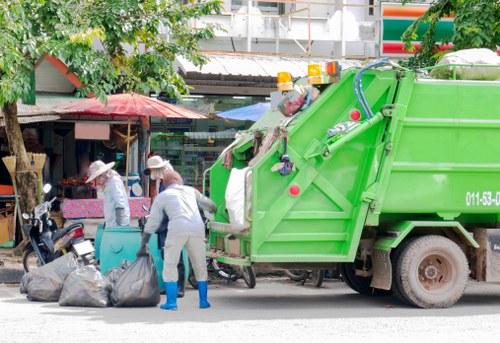 Operational procedures and PPE. Routine controls for managing corporate waste include designated collection points, secure and weatherproof storage, frequent removal to prevent buildup, and clear markings for hazardous material. Appropriate PPE—gloves, eye protection, and respiratory protection where indicated—must be supplied and used. Employers shall ensure PPE fits correctly, is maintained, and that workers are trained in its use. Mechanical equipment such as compactors and lifts must be guarded, inspected and operated only by trained personnel.
Transport, storage and segregation
Transportation of business refuse within premises and to collection vehicles should follow safe routing to minimise conflicts with pedestrians and machinery. Storage areas must be secure, ventilated where needed, and situated away from ignition sources if flammable materials are present. Segregation at source—separating recyclables, organics, general waste and hazardous wastes—reduces cross-contamination risks and simplifies safe handling. Clear signage and container colour-coding support correct segregation.Monitoring, inspection and record keeping. Regular inspections assess container integrity, storage conditions and adherence to segregation rules. Records of waste consignments, training, inspections and incident reports support continuous improvement and provide evidence of due diligence. Risk control effectiveness is evaluated through routine audits and corrective actions are tracked to completion. This documentation also supports safe handover to third-party waste carriers and helps maintain consistent standards across sites.
Emergency response and spill control. The policy requires readily accessible spill kits, first aid supplies and clear procedures for handling accidental releases or exposures. Employees must be trained to isolate the area, use appropriate containment measures and summon designated responders. Where necessary, decontamination facilities are provided and used in accordance with risk assessments. Quick, organised response reduces the likelihood of injury, environmental contamination and extended operational disruption.
 Contractor selection and supplier management. Organisations must select waste service providers based on competence, health and safety performance and documented procedures for safe collection and transfer. Contract terms should specify responsibilities for safe handling, route planning, vehicle loading and emergency arrangements. The organisation retains a duty to monitor contractor performance and to require corrective actions where deficiencies are identified, ensuring alignment with internal standards for managing business waste streams.
Waste minimisation, recycling and environmental considerations. The policy promotes reduction of waste at source and encourages reuse and recycling as part of an integrated approach to managing business refuse. Operational measures include segregation to maximise recyclables recovery, safe storage of materials destined for reuse, and promoting procurement practices that reduce hazardous packaging. Environmental protection is considered alongside health and safety—preventing releases, reducing contamination risks and supporting sustainable resource use.
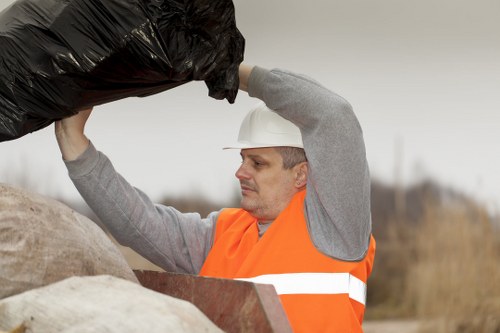 Review, audit and continuous improvement. This policy is reviewed periodically to incorporate lessons from incidents, changes in operations or advances in best practice for waste handling. Internal audits and management reviews ensure the health and safety arrangements remain effective for the organisation's waste streams. Continuous improvement is driven by monitoring performance indicators, addressing non-conformances and investing in safer systems and equipment. By embedding these standards into daily operations, the organisation aims to maintain a robust approach to the safe management of business waste, protect people and the environment, and support business continuity.