Business Waste Complaints Procedure
 Purpose: This procedure explains how an organisation handles complaints about commercial waste and related service concerns. It sets out a clear, consistent approach to receiving, recording and resolving issues raised by businesses, property managers and authorised representatives. The aim is to respond promptly, investigate thoroughly and communicate outcomes in a transparent and professional manner.
Scope and applicability: Complaints regarding business refuse collections, recycling, trade waste contracts, containment, spillage, hazardous waste handling and contractor performance fall within this process. The process does not cover general enquiries or requests for routine service changes; it is specifically for instances where the service provided appears to fall short of agreed standards or contractual expectations.
 How to make a complaint: A complaint should be submitted in writing or via an established reporting channel used by the organisation. Include the following minimum details: the name of the business or account, the location of the issue, the date and time of the incident, a clear description of the problem and any supporting evidence such as photographs, manifest references or witness details. Complaints made on behalf of a business by a nominated agent must include authorisation details.
Acknowledgement and initial assessment
On receipt, complaints are logged in a central register and given a unique reference. An acknowledgement will be issued promptly to confirm receipt and to outline the next steps. The acknowledgement will provide an estimated timescale for an initial response, which will depend on the nature and complexity of the complaint.
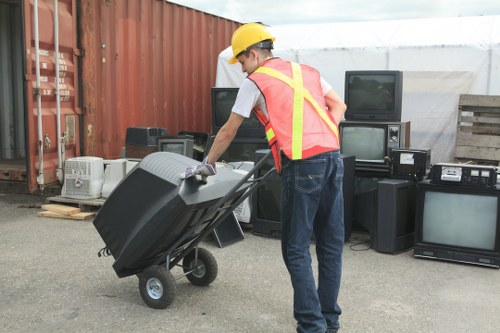 Investigation process: The investigation will be proportionate to the severity of the matter. Typical actions include: reviewing service records, consulting contracted waste carriers, inspecting the collection point or containment area, and gathering photographic and documentary evidence. Staff and contractors involved will be asked for statements where necessary. The objective is to establish facts, identify service failures and determine responsibility.
Information needed and confidentiality: During the inquiry, the complainant may be asked to provide additional information. Sensitive business data will be treated with confidentiality and used only for the purposes of the investigation. Personal data and commercially sensitive details will be handled in line with the organisation's privacy commitments.
Remedies and outcomes
The possible outcomes of a complaint include: corrective action to remedy an operational fault, contractual enforcement steps, improved scheduling or equipment changes, training or disciplinary action for contractors where appropriate, and confirmation where no fault is found. Where a health, safety or environmental risk is identified, immediate remedial measures will be taken.
 Resolution timescales: Simple complaints will typically be resolved within a short standard period, while more complex matters requiring site inspections, third-party consultation or forensic examination of waste streams may take longer. The complainant will be kept informed of progress and advised if additional time is required.
 Escalation and review: If a complainant is dissatisfied with the outcome, the procedure provides for an escalation to a senior review stage. This review is undertaken by a manager not previously involved in the investigation and will re-examine the case, the evidence and the conduct of the original inquiry. The decision of the escalation review will be issued in writing and will include reasons for the final determination.
Record-keeping and continuous improvement: All complaints and their outcomes are retained for a defined retention period to support transparency, contractual compliance and service improvement. Aggregate data is reviewed periodically to identify recurring issues, contractor performance trends and opportunities for operational change. Lessons learned will inform policy updates and contractor performance management.
Rights and expectations: Complainants can expect courteous treatment, a fair and impartial investigation and clear explanations of decisions. Likewise, organisations expect complainants to provide accurate information and to act in good faith. Frivolous or malicious complaints will be dealt with proportionately and may be closed with a formal record of the rationale.
Final notes: This complaints procedure is designed to be practical and outcome-focused. It balances the need for prompt action with thorough investigation, emphasises transparent communication and supports continual service improvement for business waste management operations. Clear documentation, timely follow-up and accountability are central to maintaining trust between service providers, contractors and commercial customers.